#augmentedreality, #fabrication
The Kick: Welcoming Our World Cup Guests
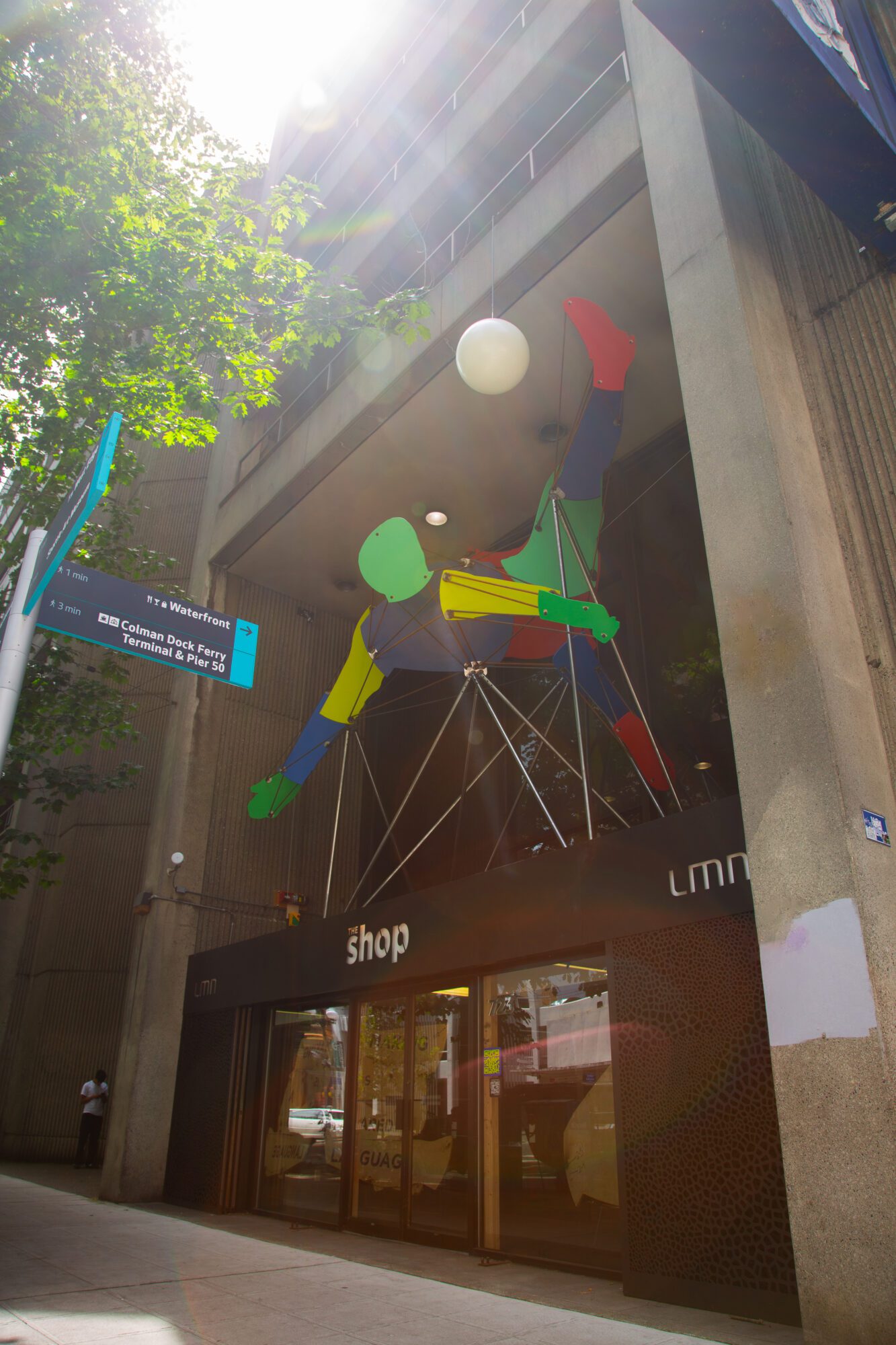
With six World Cup matches happening in our own backyard, we thought it fitting to welcome guests to Seattle in our way. Over the last month, LMN designed, fabricated, and installed The Kick, a twenty-foot-tall, forced-perspective temporary sculpture above the entry to our 1st Ave Shop.
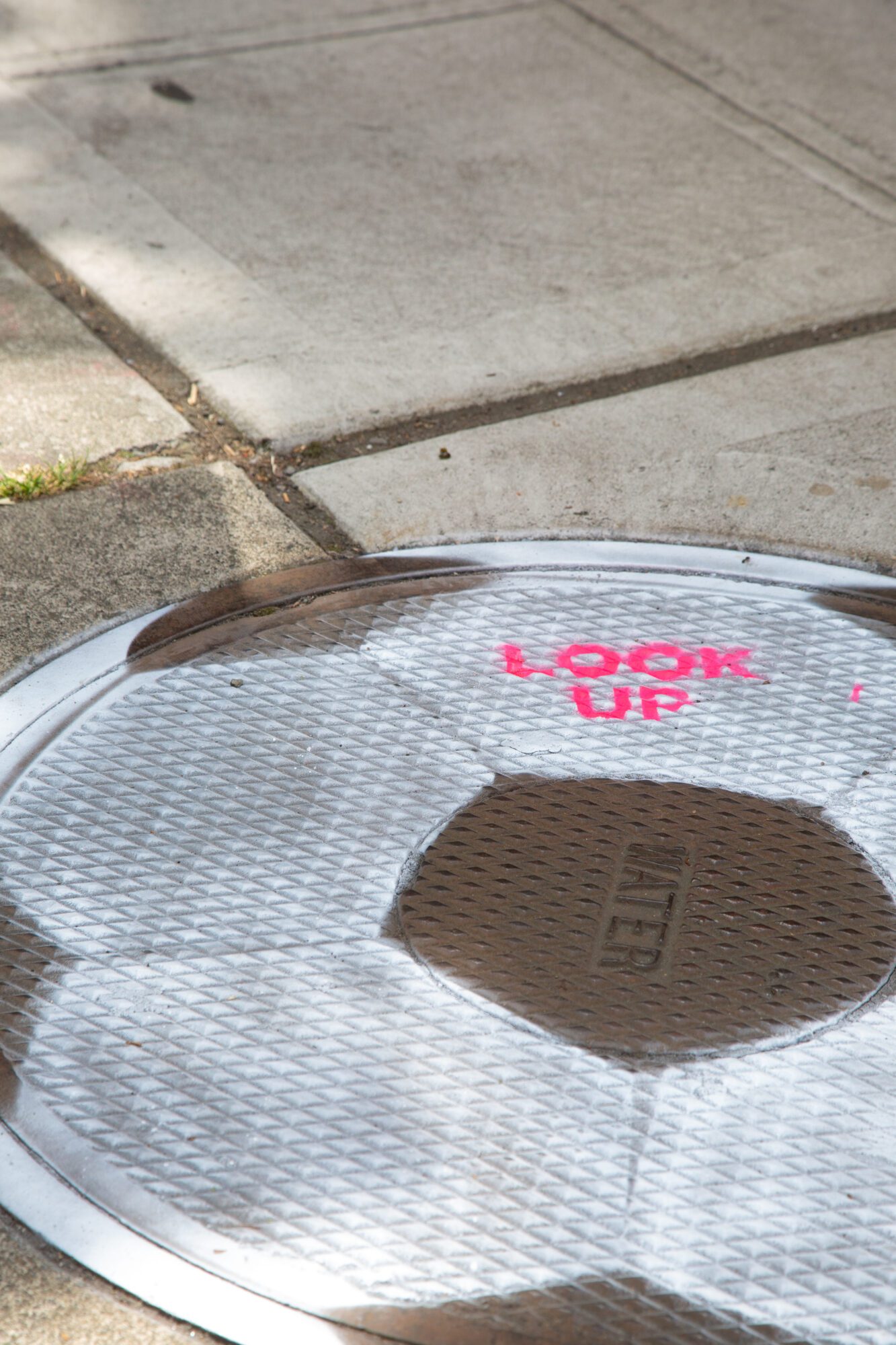
Walk by on the sidewalk directly in front of the door, and the pieces snap into place: a soccer player mid–bicycle kick. Step to either side and the figure dissolves into a series of disconnected panels suspended in mid-air. There’s a single spot on the pavement where it resolves, and part of the fun has been watching people walk past, do a double take, and then hunt around for the spot. It’s a piece you might miss entirely unless you happen to look up, and for those curious enough to pause and take note, their curiosity is rewarded.
From Sketch to Sculpture
The Kick went from a rough sketch to the final install over the course of four weeks. Roughly a week of design, another week of planning and ordering materials, and finally, two weeks for fabrication. Materials arrived at the end of week two, and by the following Monday, we were welding.
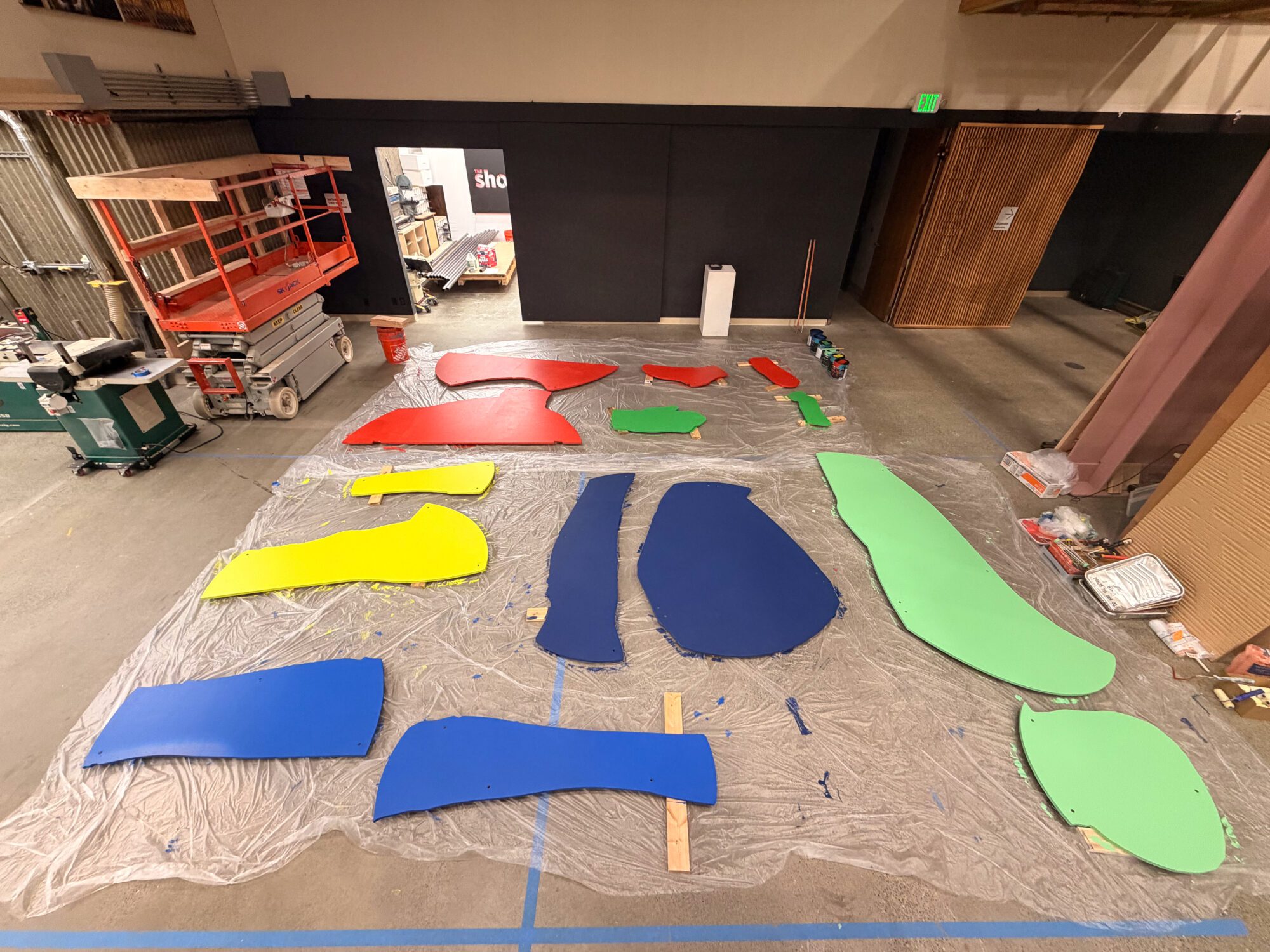
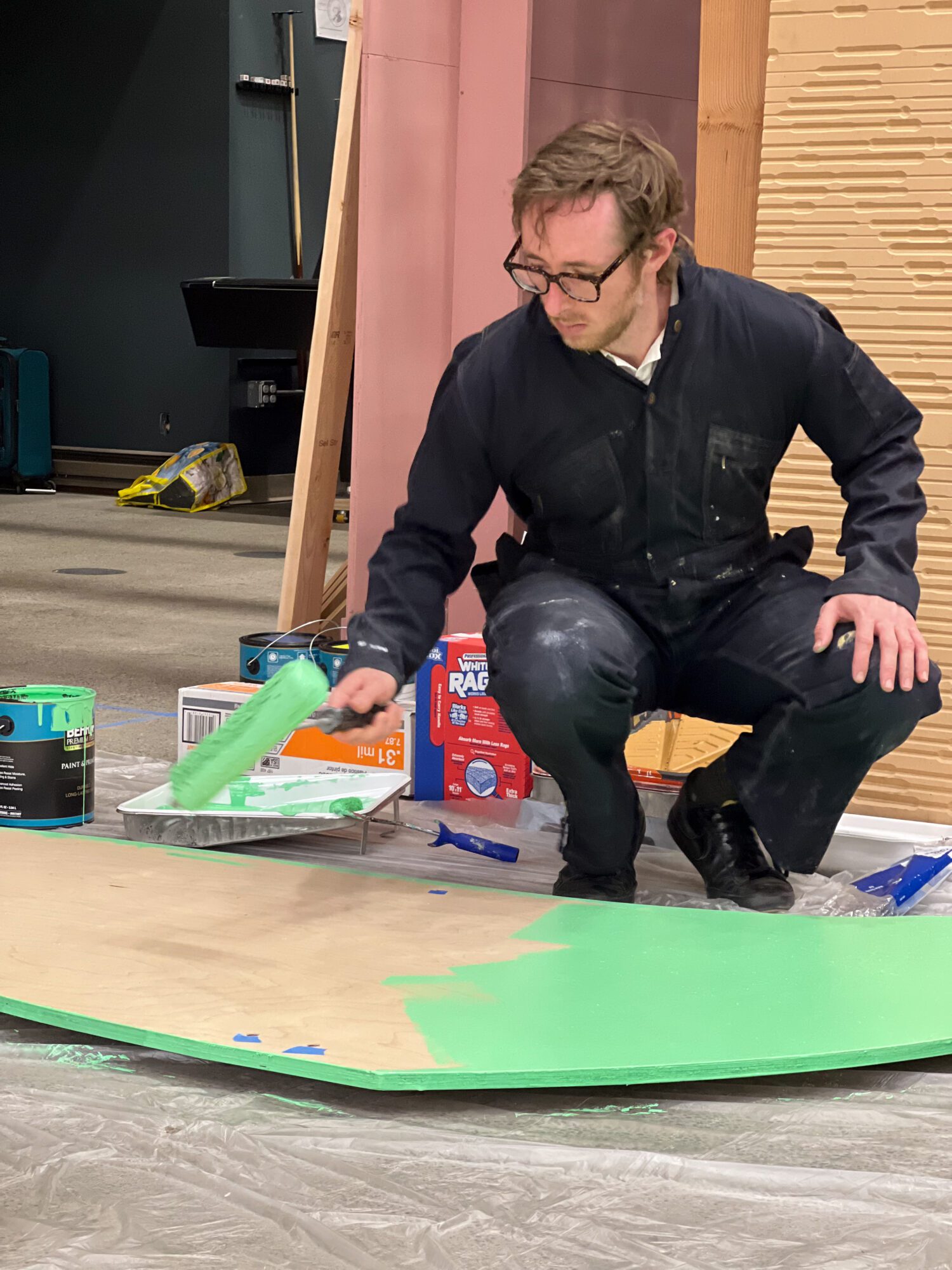
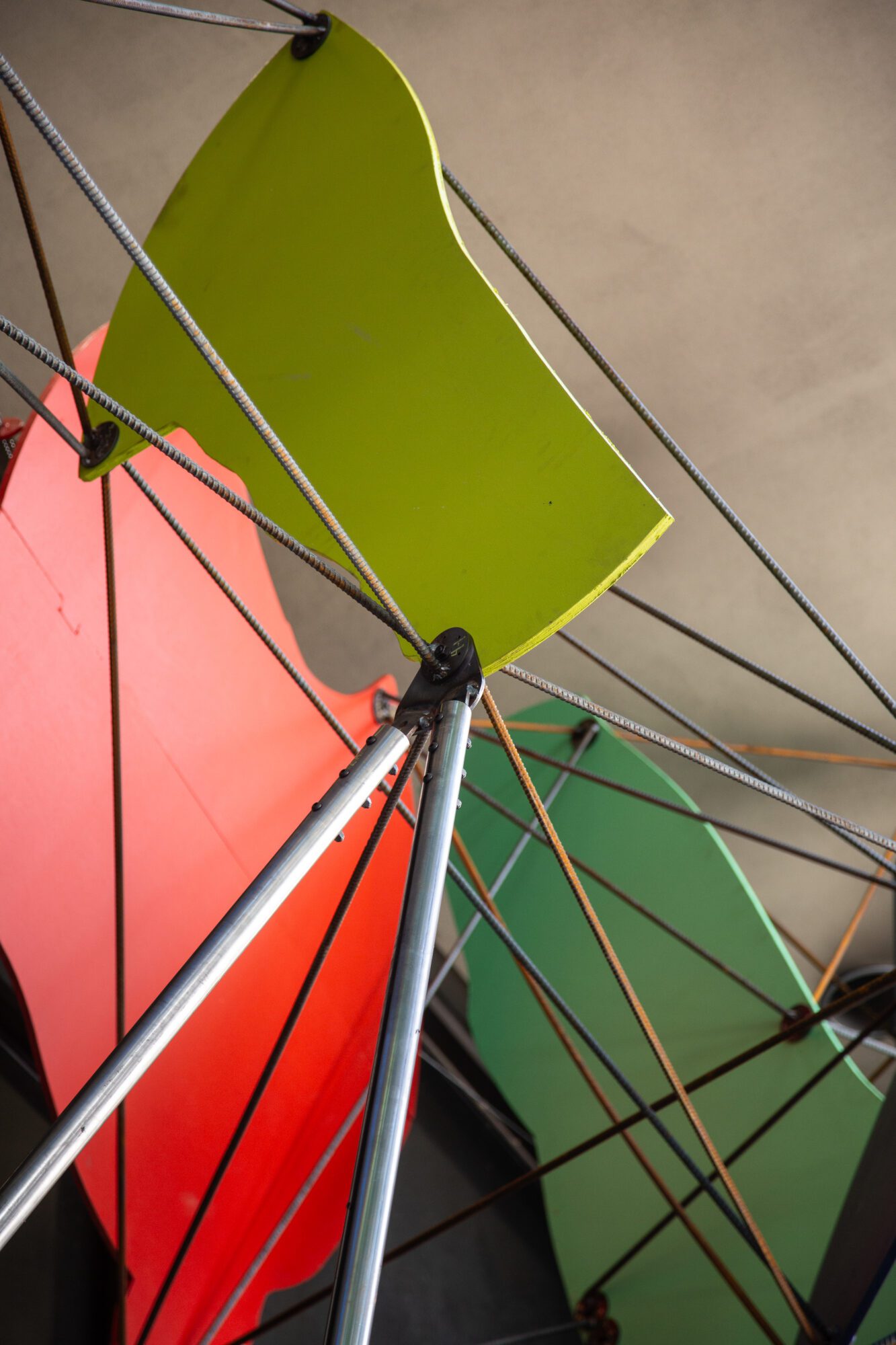
The plywood panels, painted in colors pulled directly from Seattle’s World Cup posters, were cut in-house on our CNC. These are carried on an armature constructed from rebar and custom-cut steel plates. Each plywood panel is sandwiched between a pair of plates, so the steel provides the structure, and the vibrant panels highlight the form. The sculpture geometry was driven by a Rhino/Grasshopper workflow, which allowed us to rapidly export cut files for the steel plates, which went to a local fabricator, and the CNC toolpaths, which went to our own machine.
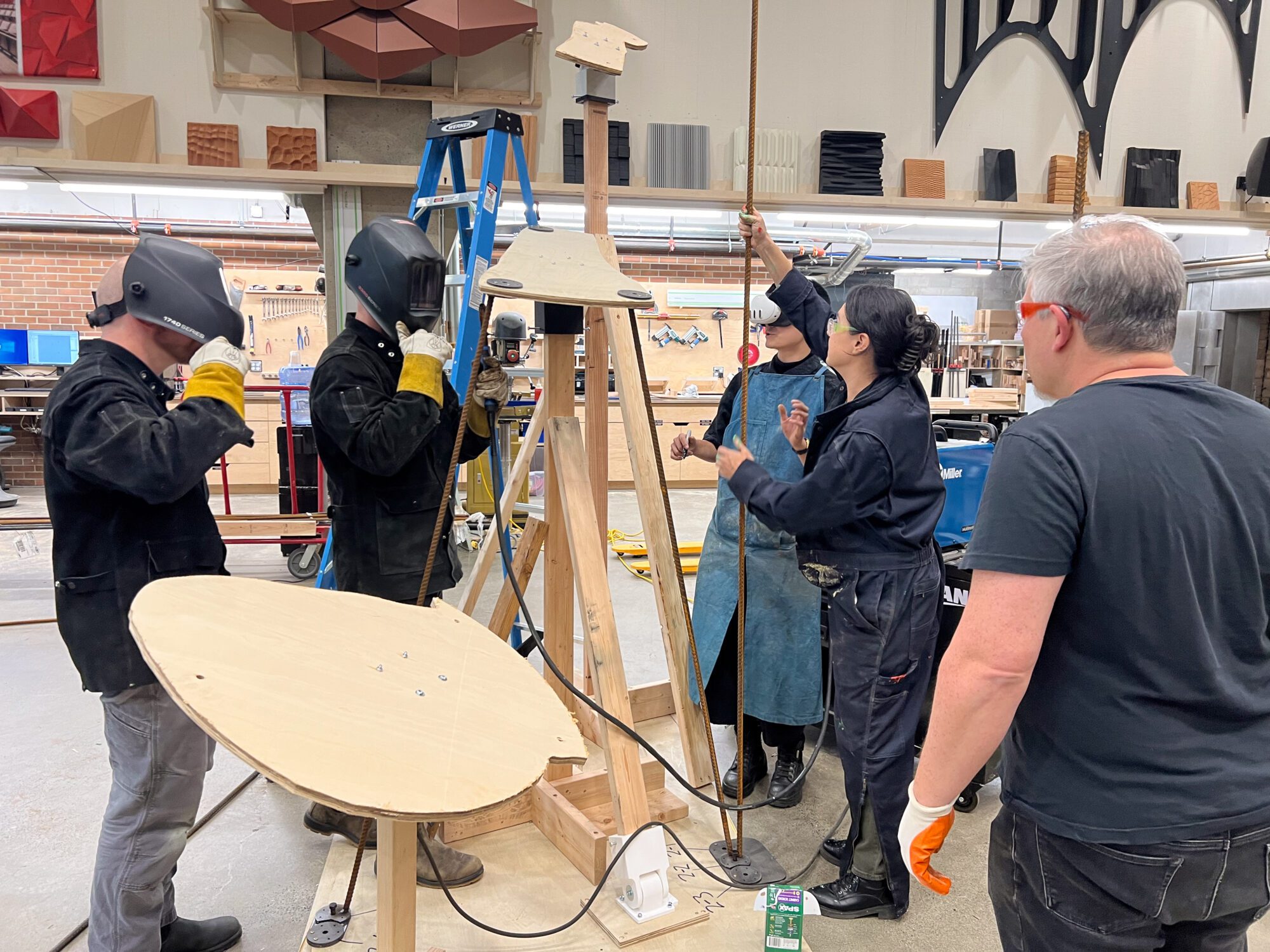
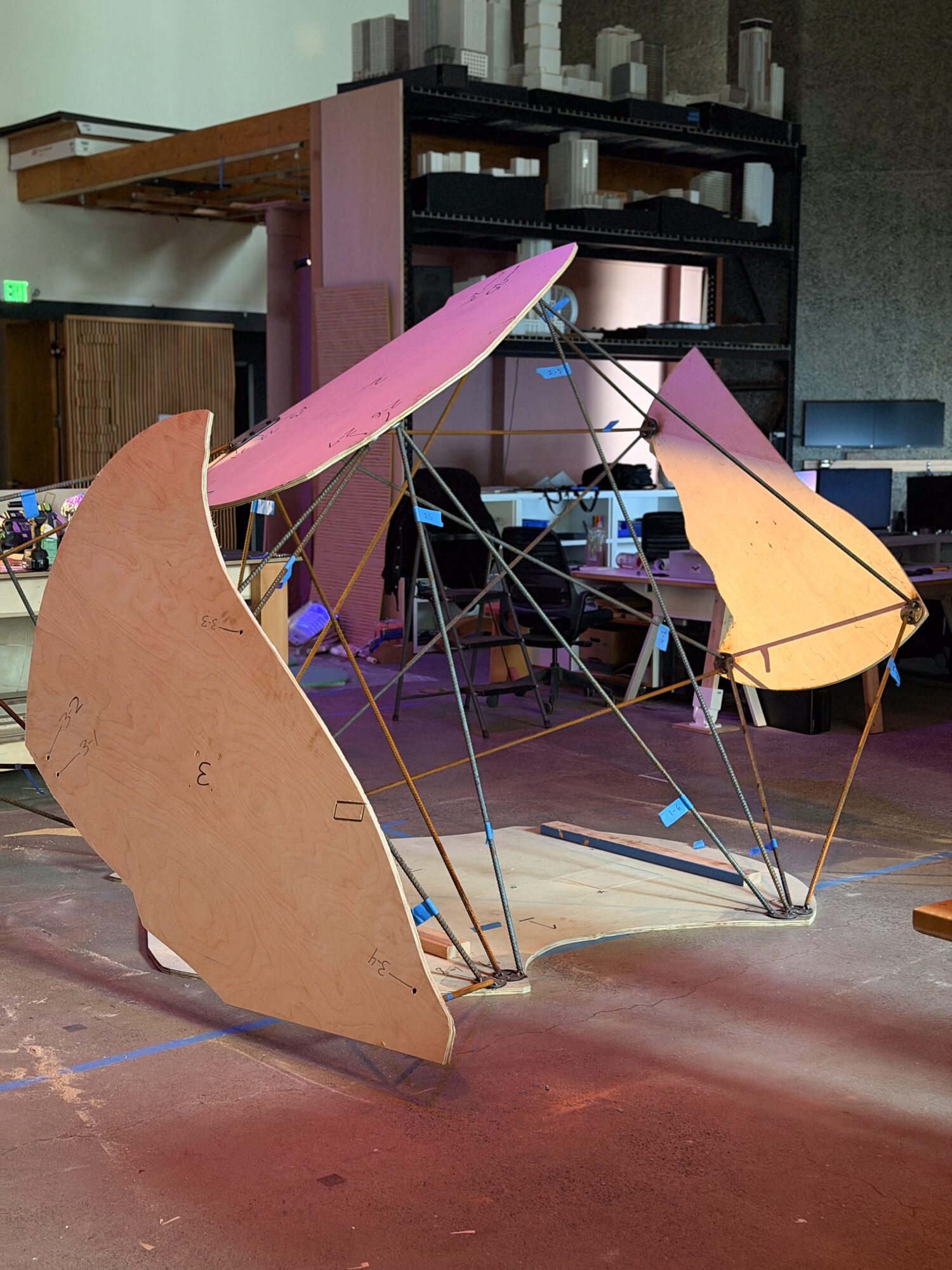
Placement jigs were either 3D-printed or cut out on our laser bed, and all the metalwork was done with our MIG welder and a rebar cutter. For install, we mounted winches on opposing walls of the site, ran them up to a pulley at each corner, and used the rig to hoist the larger segments into place.
Because the finished form is twenty feet tall, none of it could be built as a single object: it wouldn’t have fit through the Shop’s front doors. So, we broke The Kick into seven segments, proved out the plate-and-rebar system with a single test module early on, then welded up the final segments during primary fabrication.
Building Straight from the Model
One of the primary drivers for this project was the chance to test out an augmented reality (AR) fabrication workflow. We already utilize AR for design review and visualization, but this was the first time we built a finished piece directly from a model overlay.
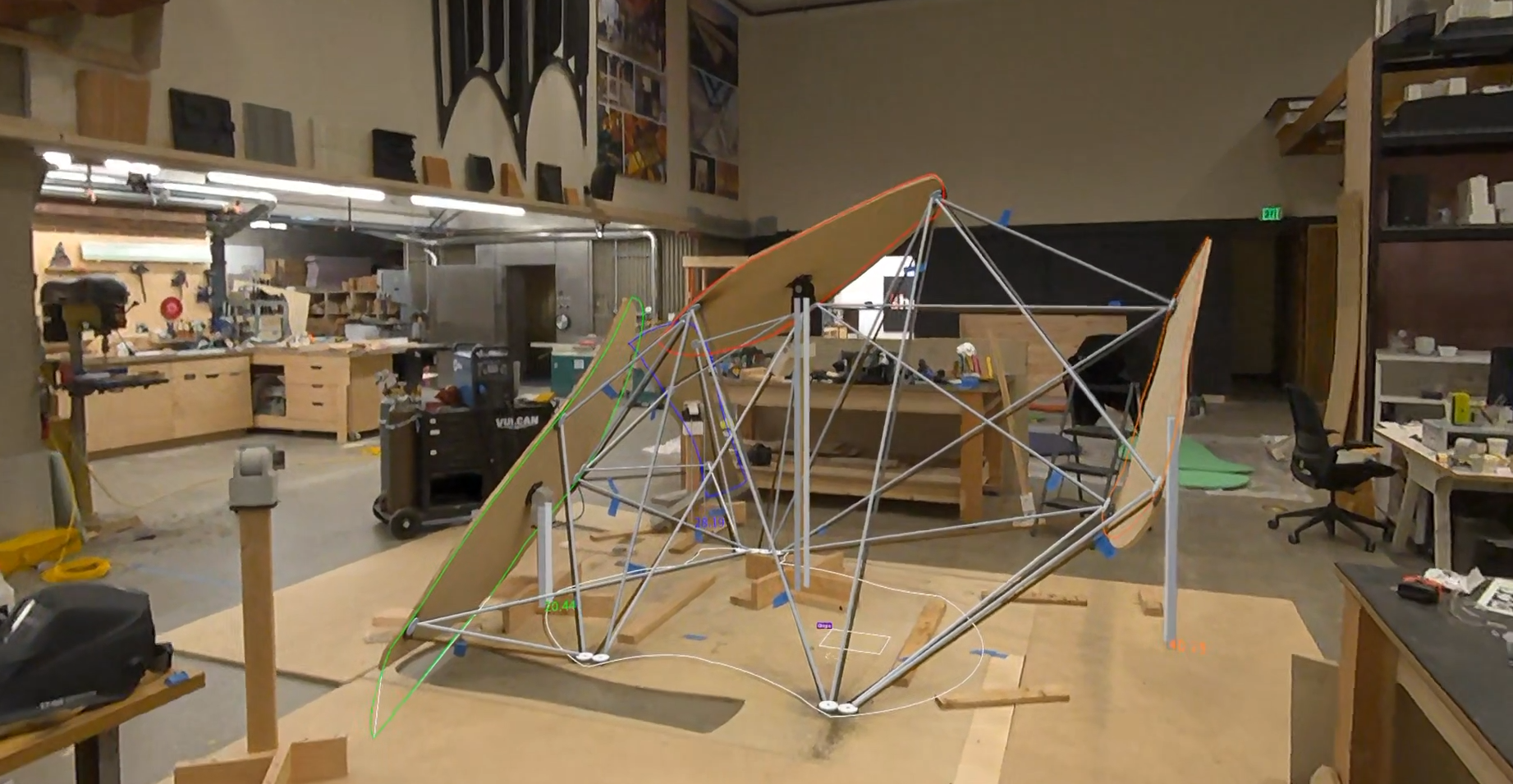
To accomplish this, our shop team set up a workflow based around two sets of CNC plywood panels. One set was painted and set aside for installation, while the other was designated as a sacrificial set to be used during fabrication, with each connection point numbered onto the panel itself. Those working panels were mounted to custom 3D-printed two-axis joints, then manipulated until they were in position using a Quest 2 and a live link to our Rhino model via Fologram.
With the reference panel locked into the correct orientation, rebar was placed using the same overlay: the headset operator directed each piece in space while a two-person team marked its length, cut it to size, and tack-welded it to the plates. Once a segment was tacked together, the rebar came off the temporary panels for final welding, then went back together with the painted set.
Making is a Shared Language
More than a sculpture, The Kick was a chance to gather. Nearly thirty people—almost one quarter of the entire office, from partners to our most recent hires—came down to the Shop, picked up a tool, and helped build it. For some of our staff, it was a first turn at the welder or the CNC, and a rare opportunity to cross-train across practice groups that don’t always overlap.
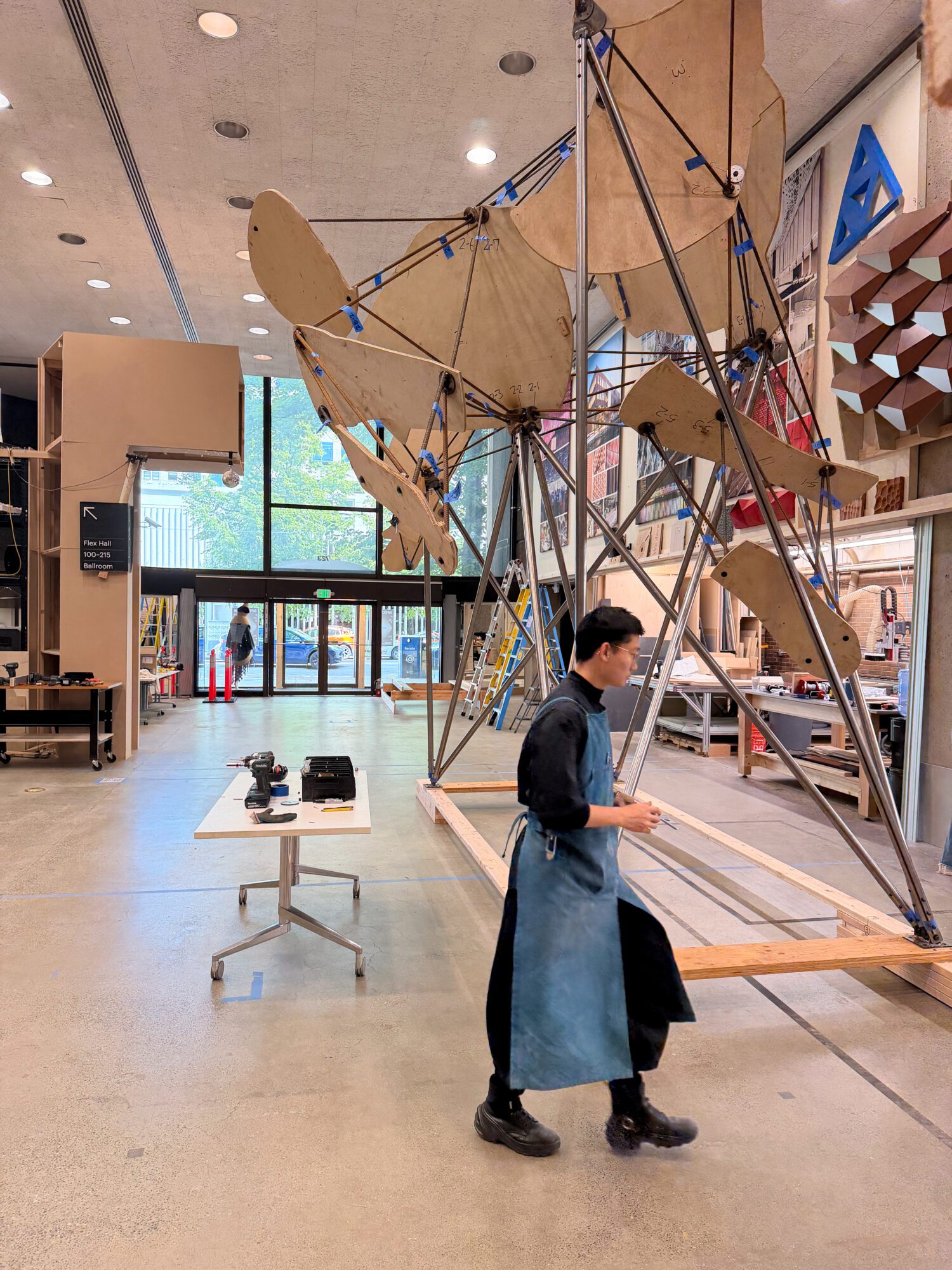
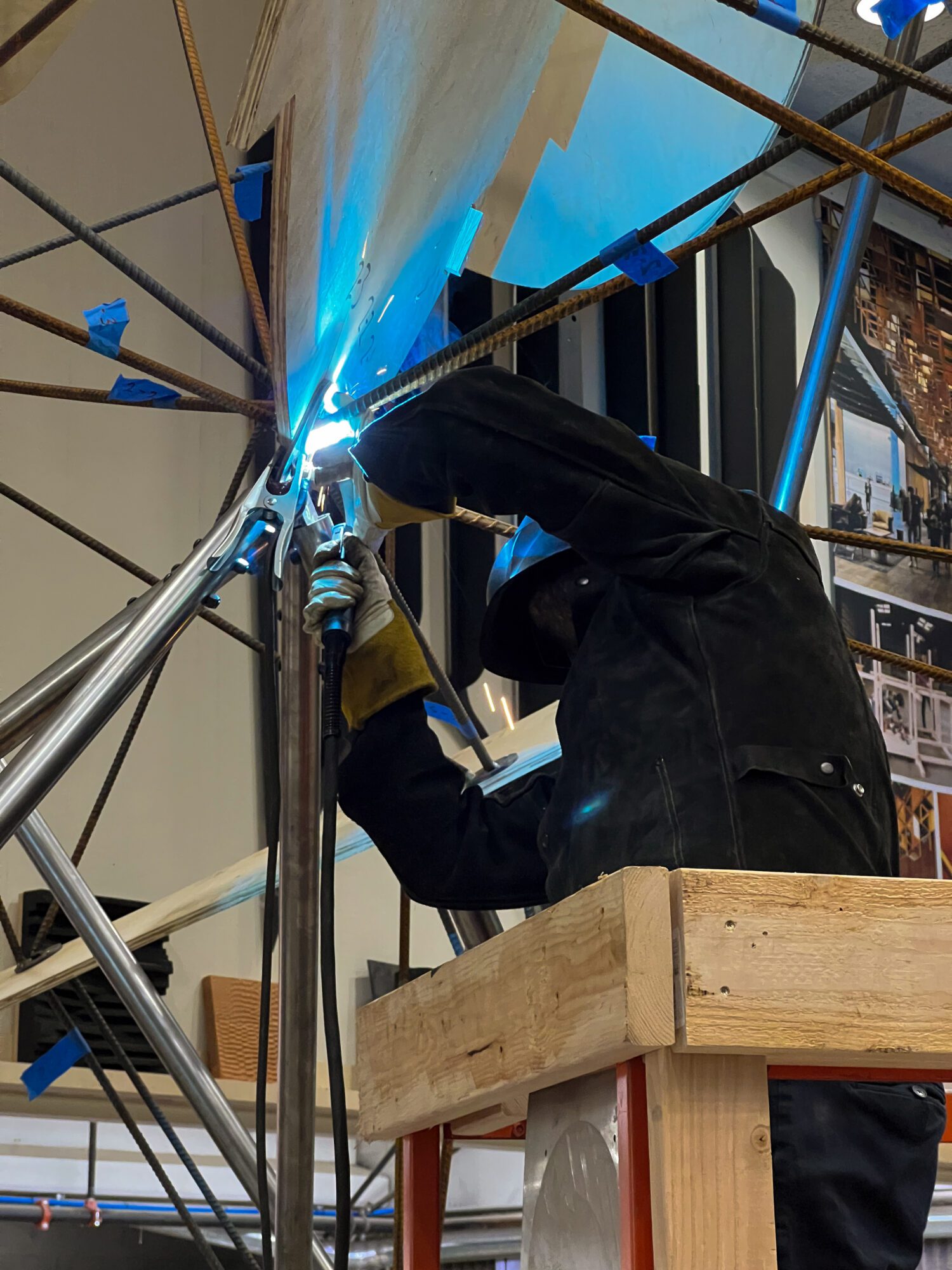
Typically, an installation like this would require an extensive cut list and part management (labeling and finding each piece during install). Instead, we placed uncut segments of rebar at the exact location indicated by AR, marked them, and cut to fit. There was a learning curve related to calibrating the model overlay so it didn’t drift. Once we dialed it in and could maintain a high degree of confidence in the accuracy of our placed parts, the payoff was obvious: it allowed a core team of three to complete the fabrication on schedule.
The precision surprised even us. During install, we accidentally mounted a bracket on the wrong side of a panel, leaving a three-quarter-inch gap where it should have met the next segment. On closer inspection, it turned out the gap revealed our assembly mistake: once the bracket was moved to the correct position, the adjacent segment lined up, and the remaining pieces went in without any need for modification.
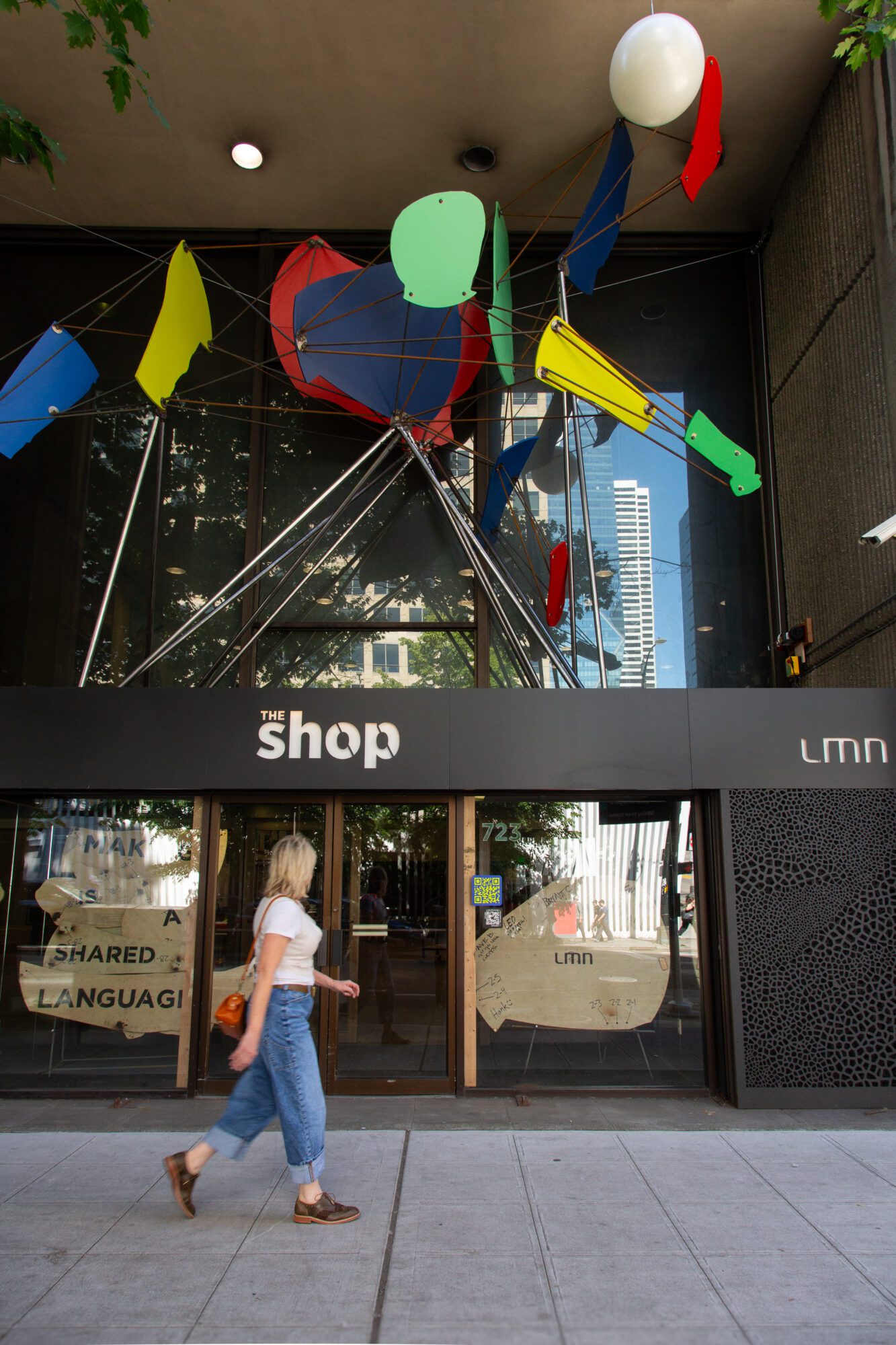
For LMN, this is a common thread running through our work: making is a shared language. We also believe in showing our work, so we put the template panels in the windows of our Shop so people could experience artifacts of our process right alongside the final work. The result is a synthesis of collaborative design, innovative fabrication, and a good excuse to build something joyful, side by side.
The Kick lives above the vestibule of the Shop at 723 1st Ave through the end of July. If you’re in town for the tournament, come find the spot.